

Welcome to Comma Partners
A new-paradigm crypto fund investing at the frontier of
community, technology, culture, & capital
War broke out. Now what?
The Straight of Hormuz is still closed.
Oil is up. The dollar is up. Yields are up. Inflation expectations are up.
And yet - crypto is up too.
[TLDR] Markets expect a quick resolution, but we see more downside risk than is priced in. In our view, left tail risk over the short- and medium-term has increased considerably, while right tail risk has decreased.
We’re still bullish for the year (and even more so over the long-term), but increasingly wary in the short-term. We’ve decreased risk over the last several weeks as a result.
Fundamentally, crypto’s technology is working as designed, and every crisis in which it thrives strengthens the case. These are the moments that crypto was built for.
Market snapshot
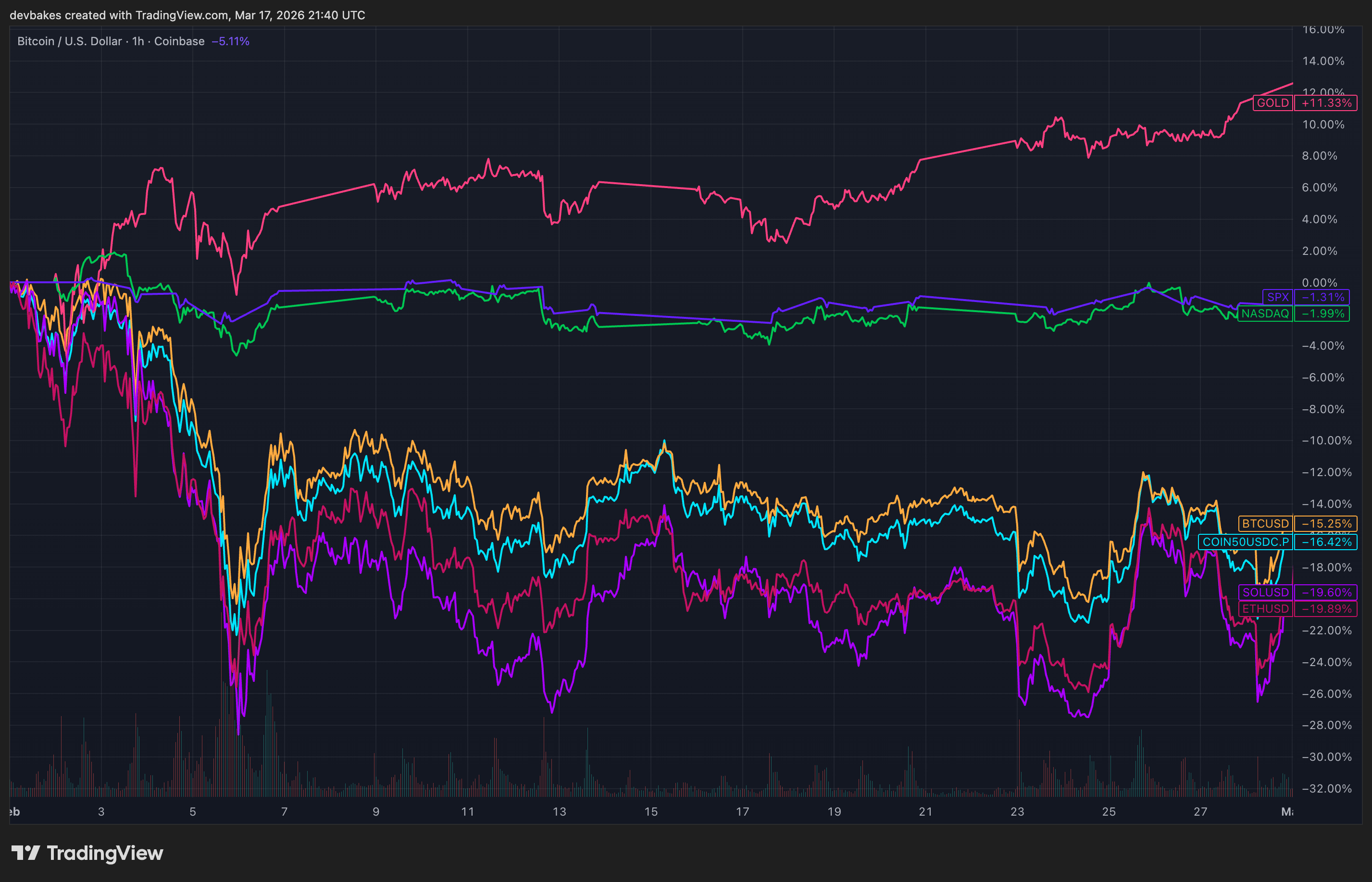
For the month of February.
Crypto:
BTC (-15%)
ETH (-20%)
SOL (-20%)
Equities:
S&P 500 (-1%)
NASDAQ (-2%)
Gold:
Gold +11%
What has the Iran war done to macro? Our lead dominos are softening
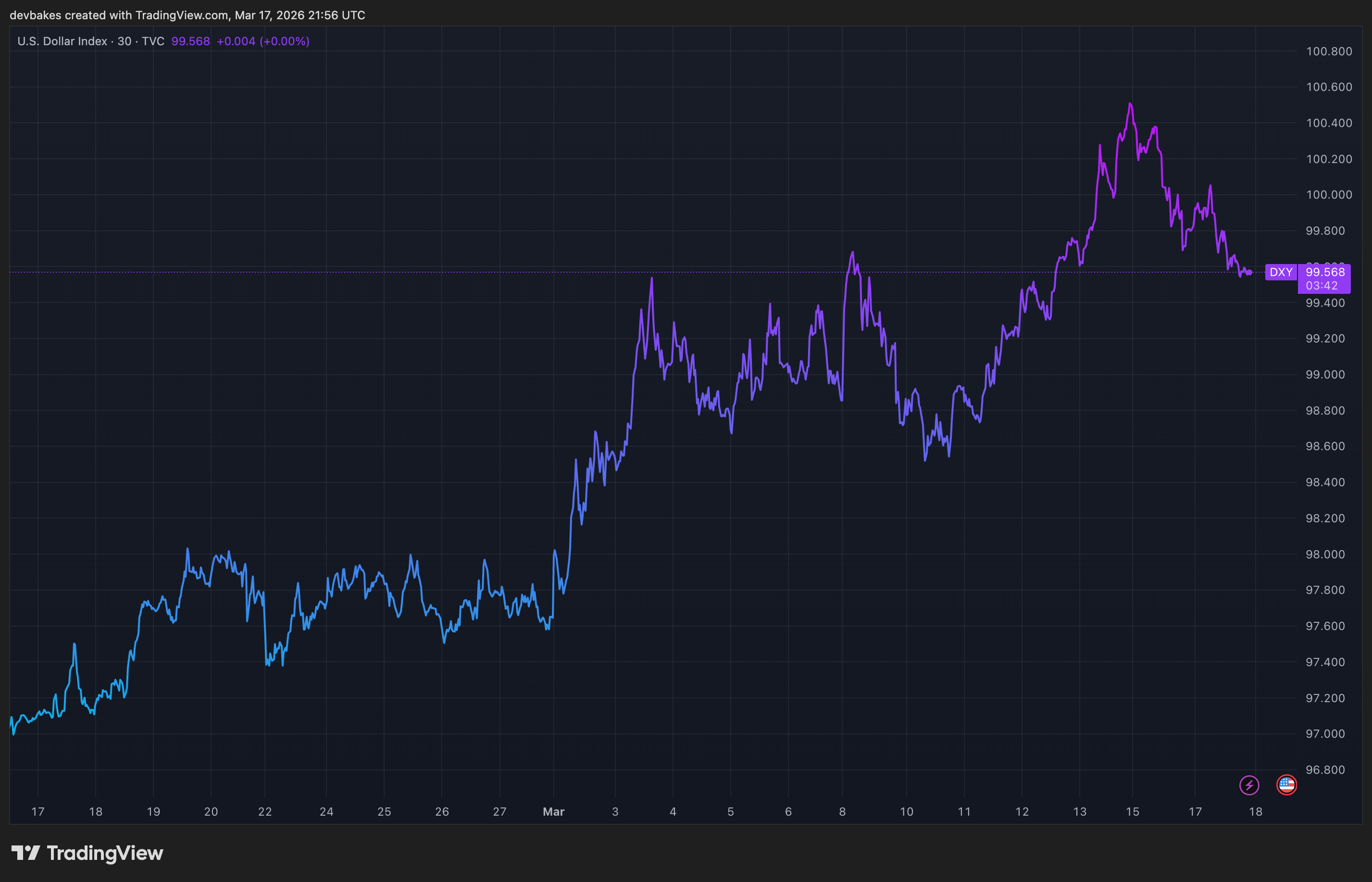
USD strengthening: USD ~+2% since the initial strikes in Iran, testing the 100 level.
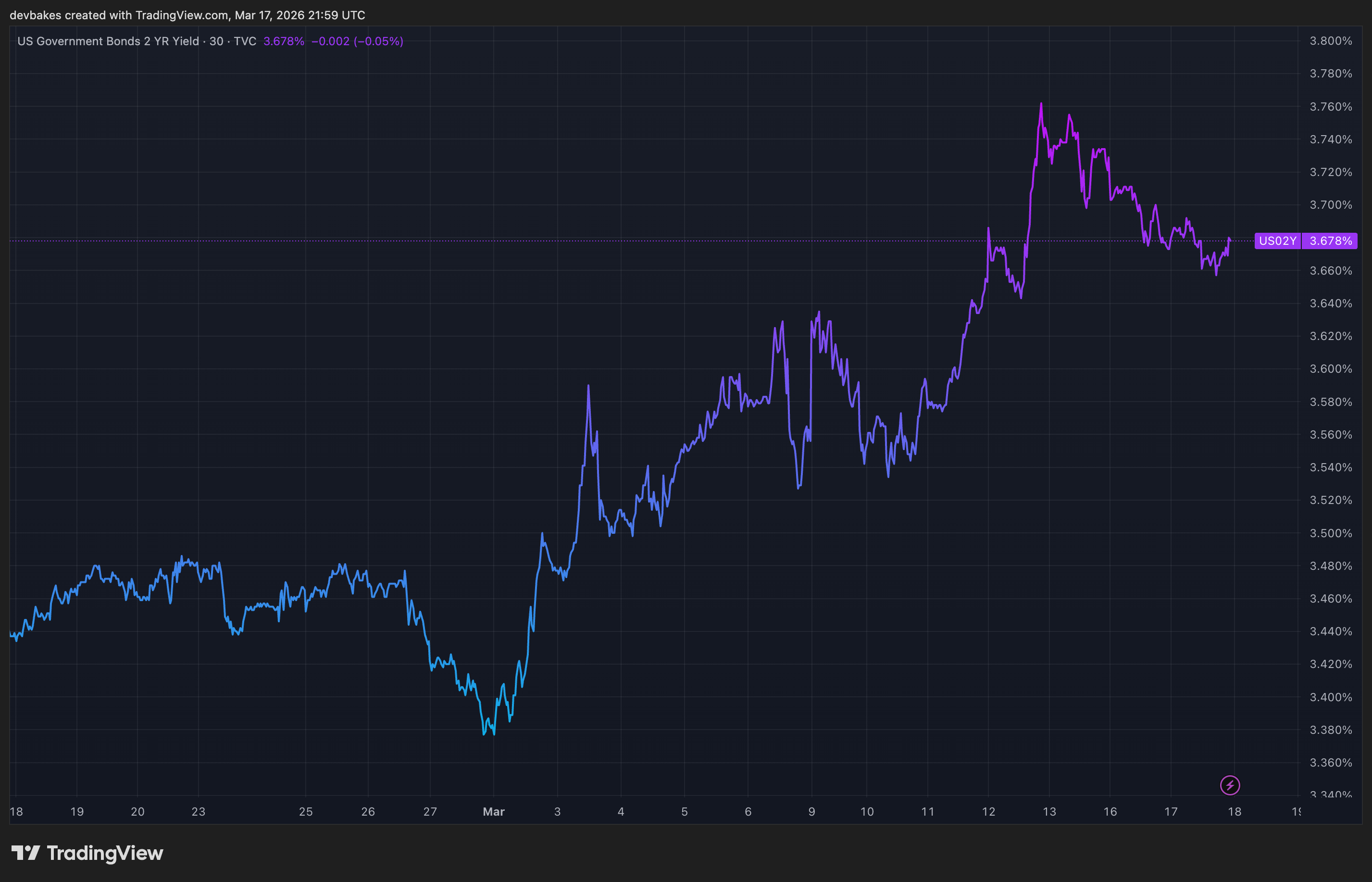
Treasury yields climbing: 2-year & 10-year treasury yields are ~+300bps & ~+250bps since initial strikes.
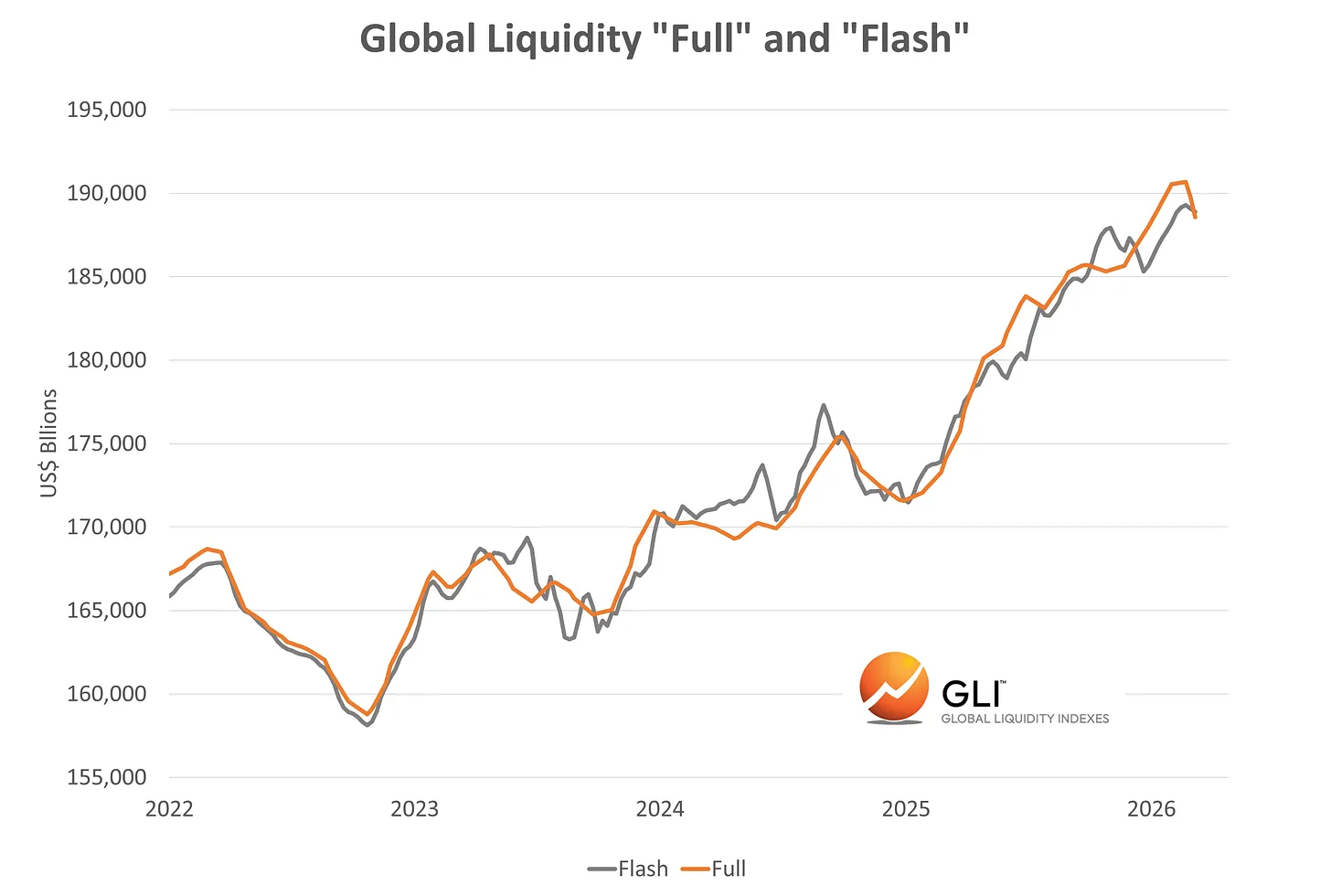
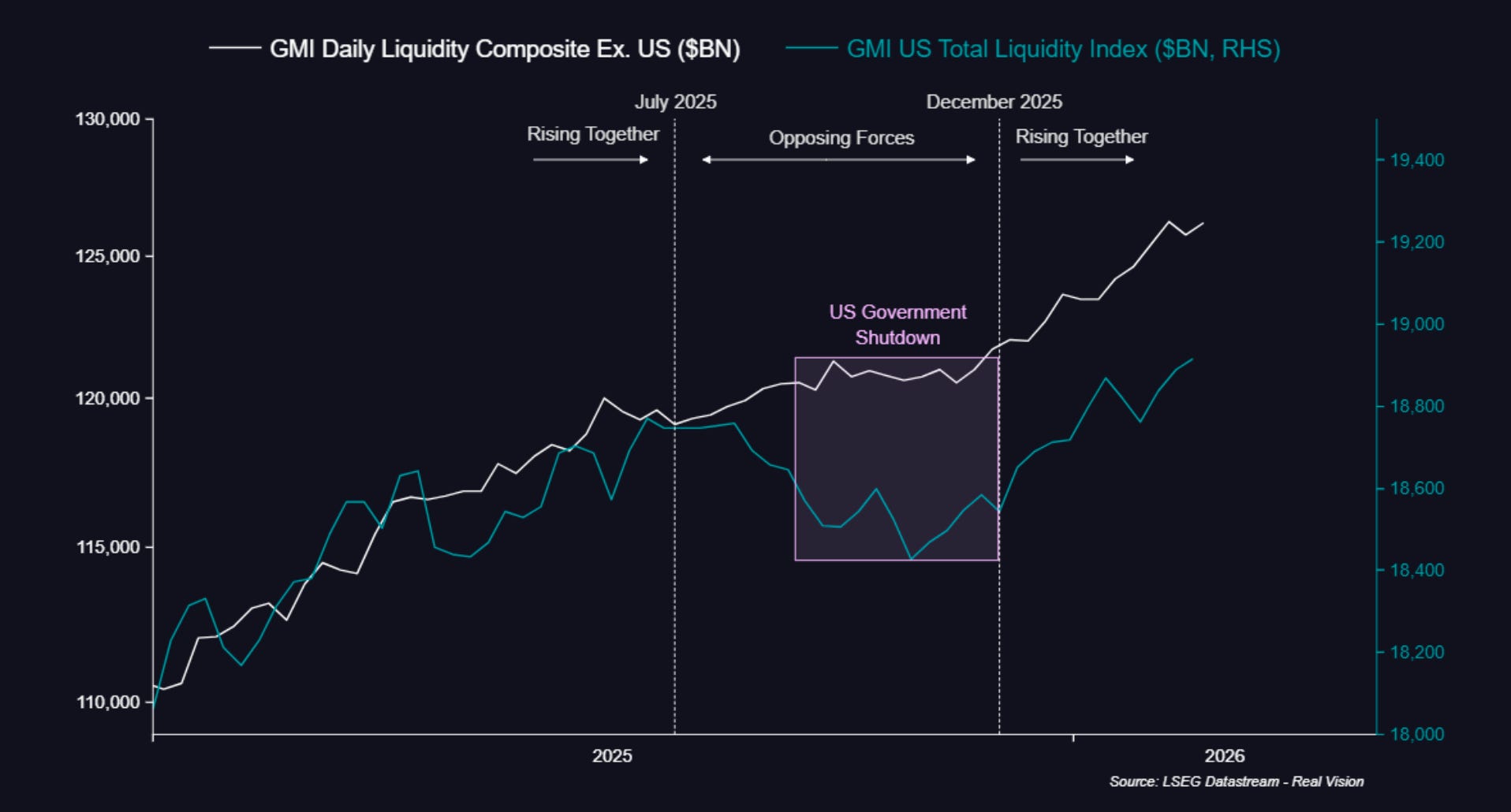
Global liquidity dipping slightly: Still right at ATHs, but dipping slightly, largely due to the stronger USD and rising bond volatility.
Inflation climbing: Truflation readings moved up from well below 1% to ~1.5%.
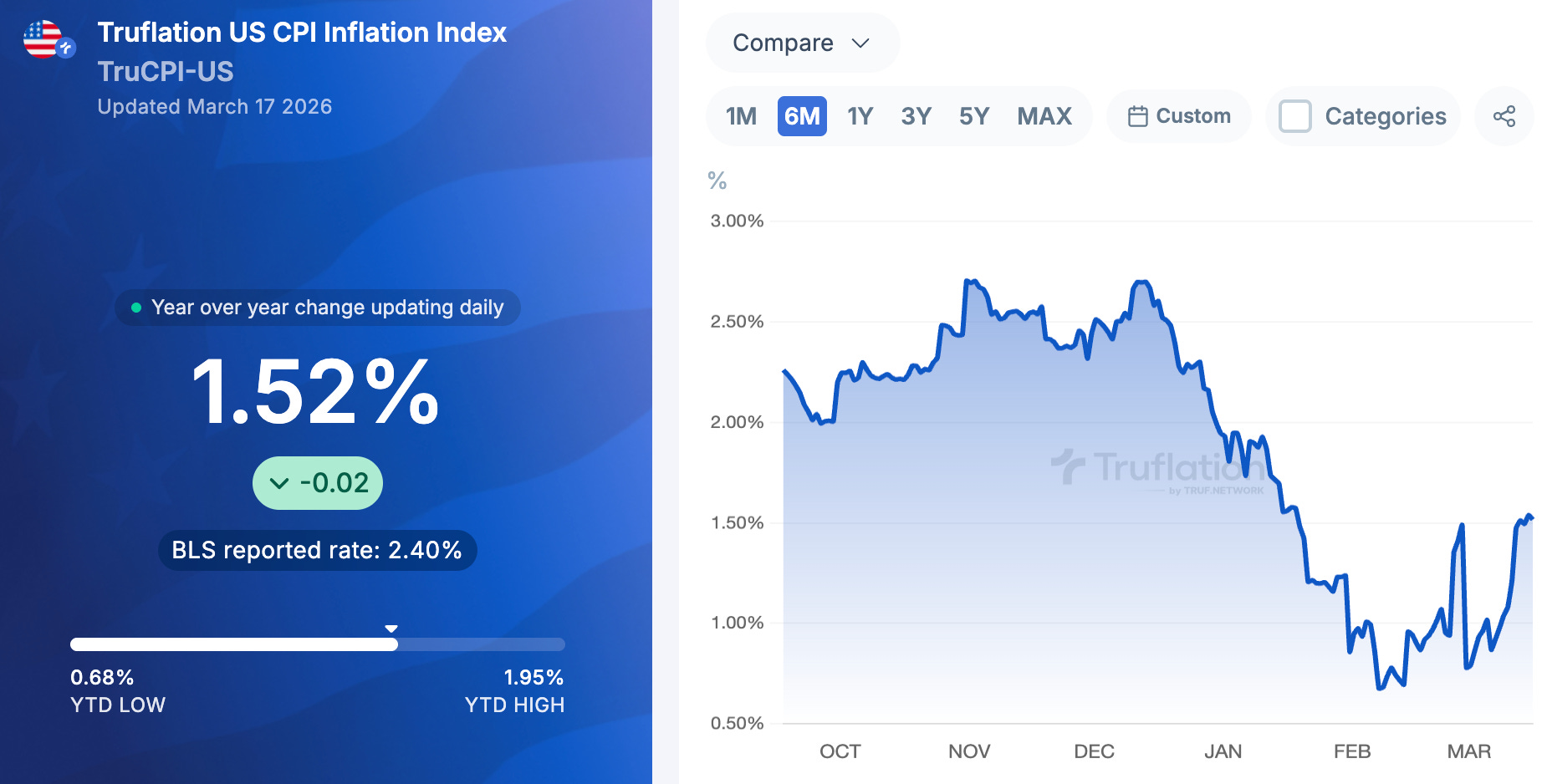
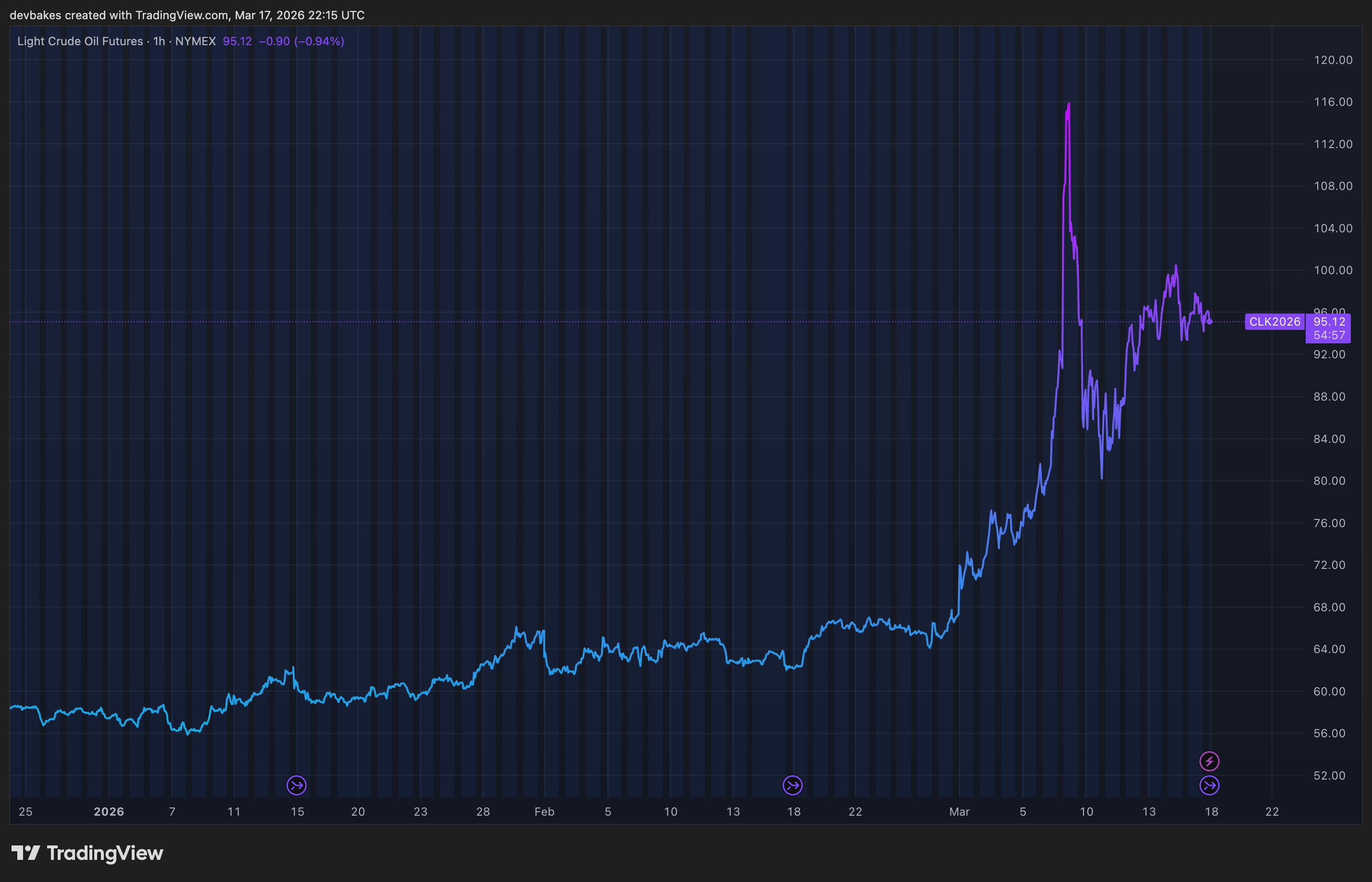
[TLDR] Oil prices are greatly elevated, and lead financial conditions signals are tightening in response.
Is this an issue for the business cycle? Not yet, but eventually
We can survive an oil price shock - so long as it’s short-term: We’ve all had to become armchair geopolitical commentators over the last few weeks, “monitoring the situation” in the Strait of Hormuz - Iran’s key point of leverage. So long as they can keep it closed - and oil prices elevated - the risk of prolonged, global economic ramifications continue to rise. If the straight reopens soon, and oil prices cascade down, the business cycle and growth outlook can likely stay on track in its positive momentum over the last handful of months.
That said, the US is more resilient than the rest of the world: The US is more isolated from these shocks, as our domestic oil production is robust. We’re more isolated, but not impervious. Polymarket odds of a recession have climbed noticeably.
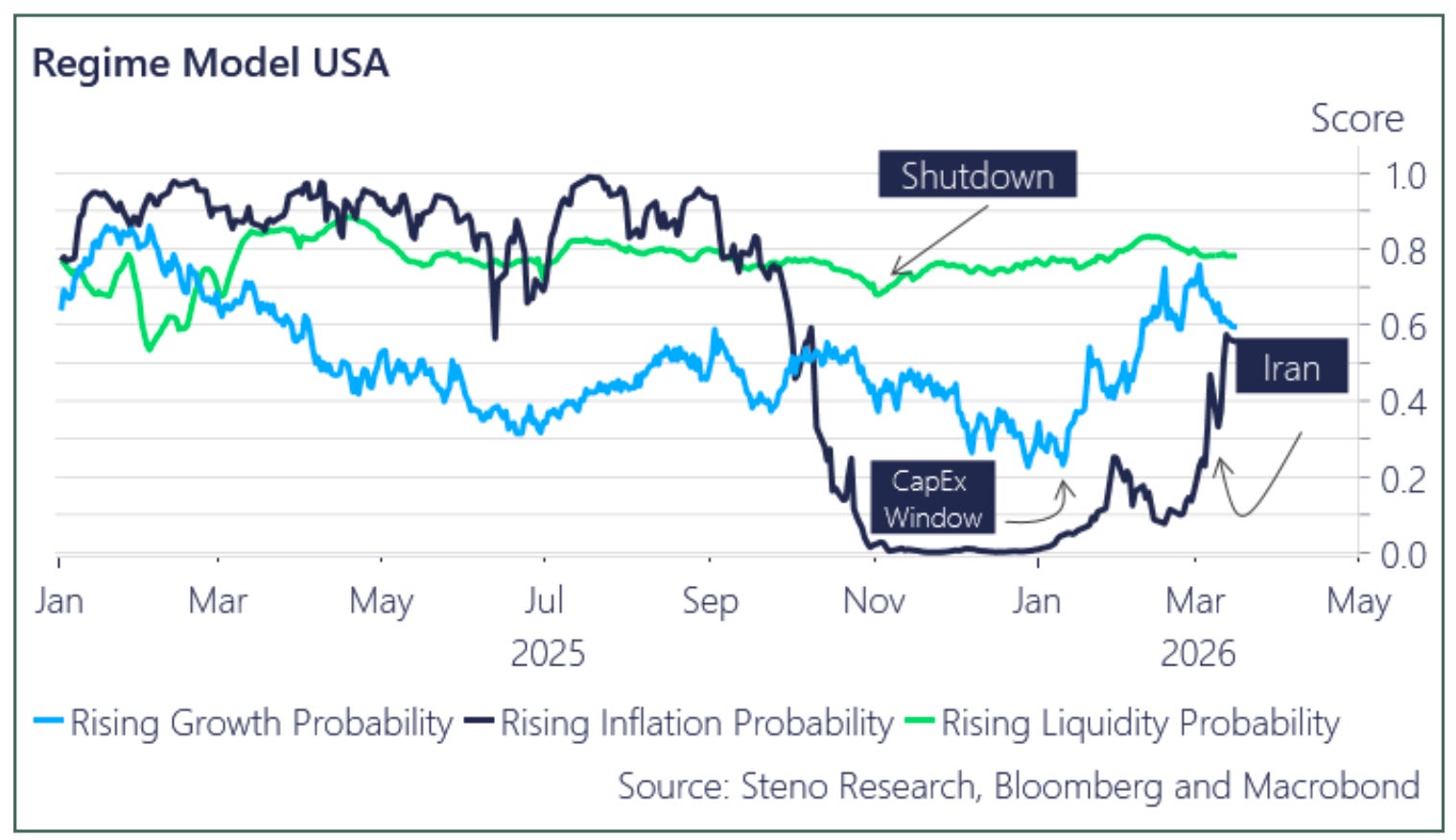
[TLDR] I’m keeping an eye on whether we get a resolution by early April. A resolution within the month should keep the broader economic impacts at bay.
Our view is that US growth is resilient - material impacts on growth would take 6-12 months to truly show up - but the longer oil prices stay elevated (and our lead dominos continue to weaken), the greater the impact.
How are asset prices holding up? Surprisingly resiliently
Equities & gold are still near ATHs.
Crypto has materially outperformed since the war broke out.
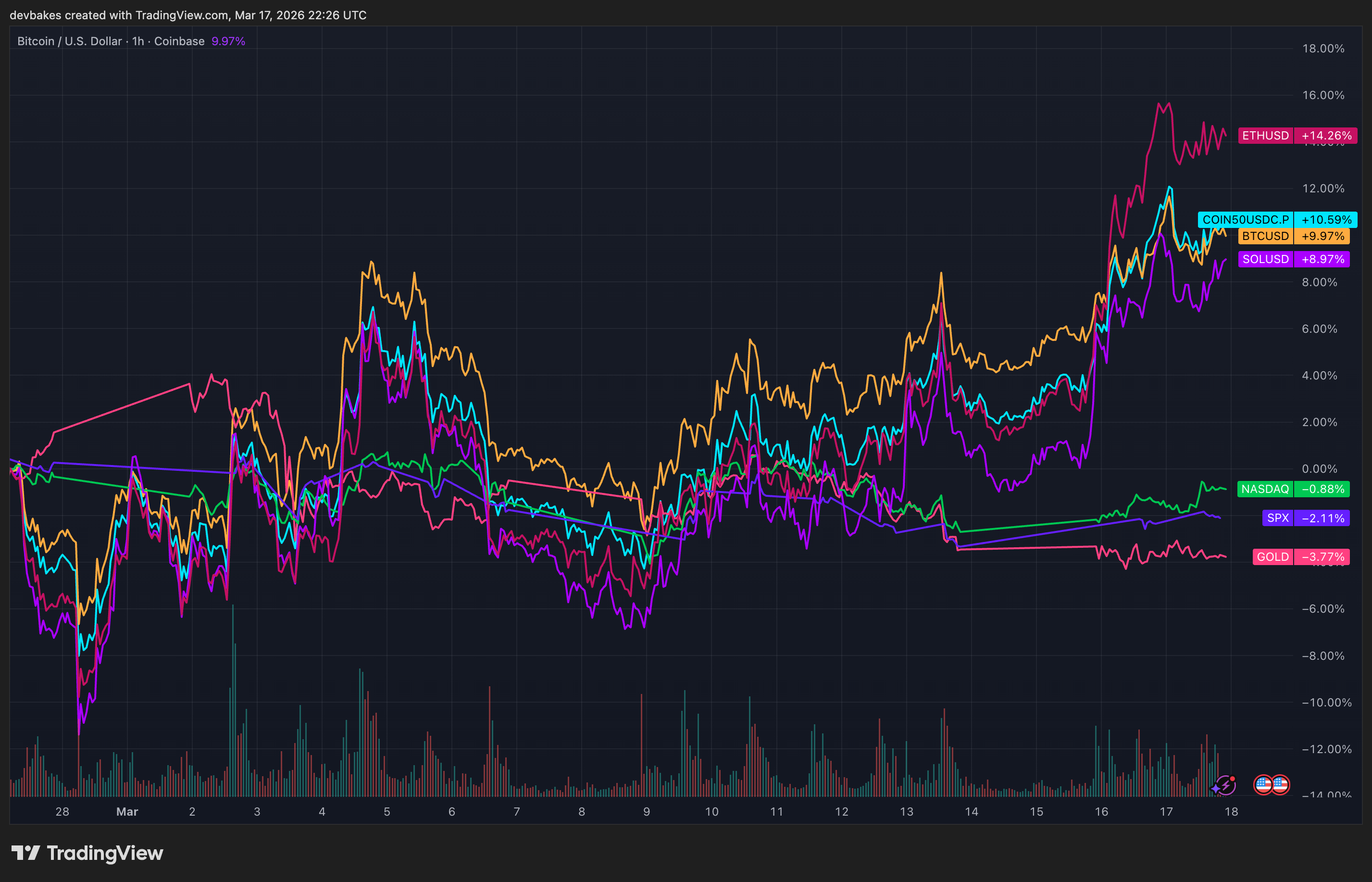
[TLDR] Asset prices seem to expect in a resolution in short order.
Is the appropriate risk priced in? Not in our view
While asset prices reflect expectations for short-term resolution, prediction markets and broader analysis suggest greater risk: Polymarket’s base case doesn’t see a ceasefire until at least June - longer than asset prices seem to suggest. Several more months of disruption would wreak havoc on supply chains and bruise the business cycle - perhaps even ending its expansion.
This is not as easy to unwind as last year’s geopolitical shocks: Last year, geopolitical risks were sparked largely by Trump’s decisive attempts to restructure global trade and economic relationships. As such, when desired, the US could reverse course on a dime. But war is not a unilateral proposition. Even if desired, the US doesn’t have the ability to prompt a ceasefire on its own.
The evidence: The Straight of Hormuz is still de fact closed, despite the US making statements to the contrary. This is a much more complex and multi-faceted chess board.
Growth, financial conditions, and liquidity are worth watching: While growth impacts will take 6+ months to truly start to show up, the length of the conflict compounds other variables that in turn compound the macro puzzle. Namely, the longer oil prices stay elevated, the higher inflation expectations rise, the less likely rate cuts get, the higher rates get, the stronger the USD gets, and the tighter financial conditions and liquidity get. Not to mention the fact that elevated volatility and uncertainty are not market-friendly.
[TLDR] We don’t know how this will end, but we see more downside risk than asset prices seem to suggest.
Why is crypto up? It’s working as designed
Liquidity is still the dominant driver - and it’s still right at ATHs: Global liquidity hit all-time highs heading into the conflict and remains right around those levels. Crypto is the most liquidity-sensitive asset class around.
BTC is trading more like digital gold than the NASDAQ: For now, BTC is delivering on its vision - a neutral, non-sovereign store of value. In the context of global economic and kinetic war, its utility skyrockets. Gold has performed very well in anticipation of the conflict, but since strikes began, crypto has outperformed.
Stablecoins are similarly providing real-world utility in real time: Conflict and economic sanctions create immediate demand for permissionless dollar-denominated money. This is a core premise of crypto’s technology.
Crypto’s functionality through crises increases trust: Each crisis that crypto weathers with functional tech and resilient price action de-risks it in the eyes of both builders and investors.
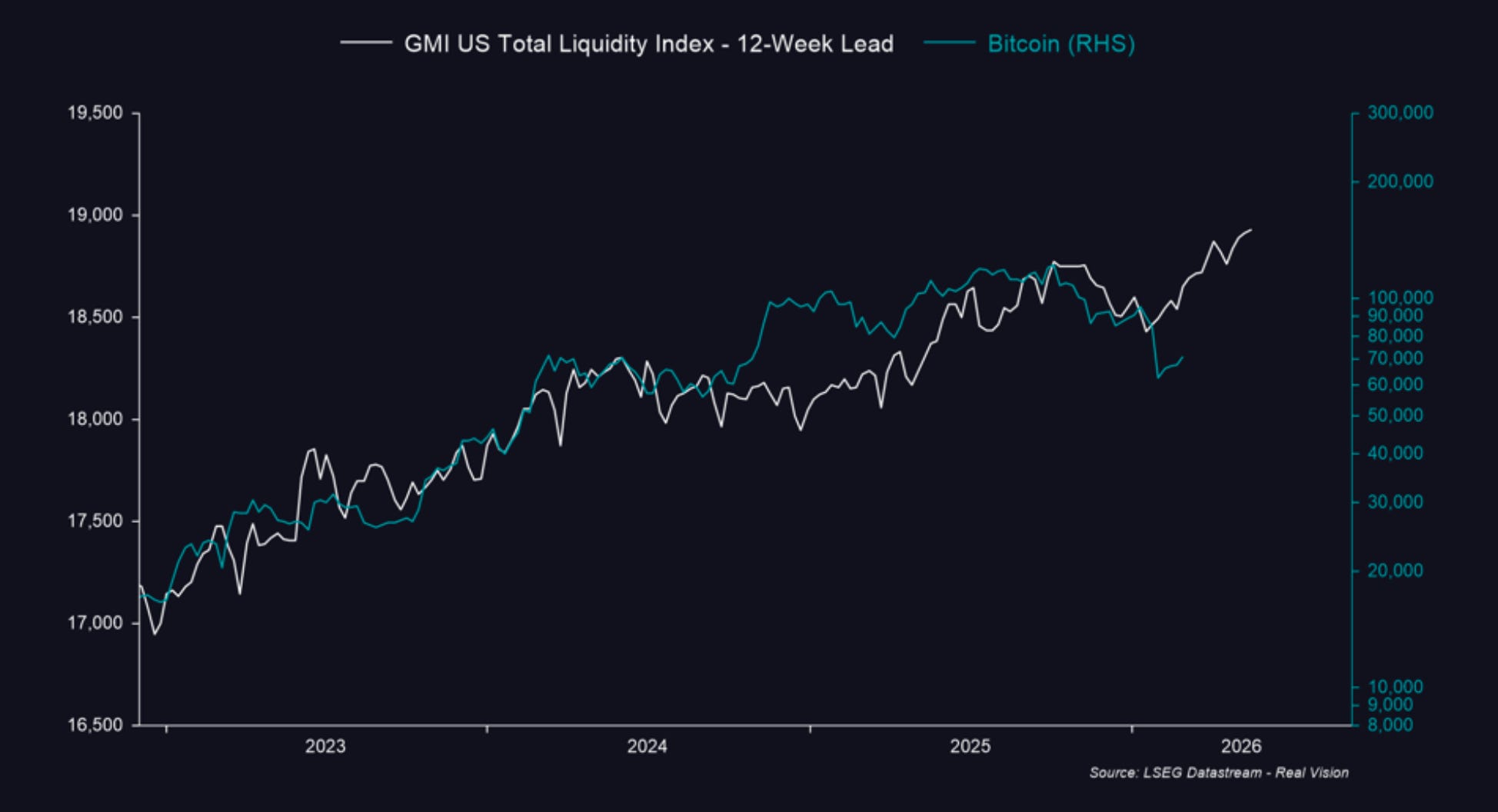
[TLDR] Crypto is performing because liquidity remains, and the technology is doing exactly what it was designed to do. Crypto is anti-fragile, and performance through crisis strengthens its case.
Until next month,
Devin
Related things you might enjoy ⬇️



Click here to follow on Twitter.
Click here to follow on YouTube.
Click here to follow on Spotify.
Click here to follow on Apple Podcasts.
If you were forwarded this email, click the button below ⬇️ and enter your email to subscribe.